Film, Faith, Filth: The Photographic Taboo in the Elflands
INTRODUCTION
Enet Lacarezh was, by all accounts, a decent man. Born in Choharo, a town in present-day Dakhenbarizhan, he had six sisters and twenty nieces and nephews, and became his family’s primary breadwinner at the age of fifteen, when sessiva, a viral epidemic, killed his father and severely disabled his mother and two of his sisters. All who knew the man, a photographer and travel writer, described him as kind and even-tempered. None of his sisters or their children, whom he made an effort to support even once they married out of the Lacarezhada and his obligation, ever accused him of abuse or any sort of mistreatment. It came as a great shock to the family when, in the thirty-ninth year of the reign of Varenechibel IV Lacarezh was remanded to the Nevennamire, a prison of the Elflands’s Untheileneise Court, and ultimately beheaded for acts of gross indecency.
What did Lacarezh do? For decades, no one knew. His trial—if we can call his appearance before Varenechibel IV a trial, given that it lasted under a minute and if Lacarezh so much as spoke, it was not recorded by the imperial secretaries—brought forth no evidence and did not elucidate the allegations. His execution was quickly followed by a ban on photography in Thu-Cethor and the Imperial Court, but Lacarezh did not invent the medium, nor was he the first to turn a profit on the sale of photographs. The answer—or the path to it—laid, unexpectedly, in the diaries of Csethiro Drazharan, published posthumously some ninety years later. Csethiro Drazharan was the wife of Edrehasivar VII, the so-called ‘goblin emperor’.1
But we’ve gotten ahead of ourselves. Enet Lacarezh’s primary source of income was selling prints of pastoral scenes from the rural Ethuveraz to middle class families in the increasingly heavily industrialized cities. The truly wealthy had hunting lodges in the west or winter homes in the south, their own little pieces of idyllic countryside, propped up by servants and in no way reliant on the incomes of their vineyards or rice paddies to survive. The middle class, if they tried to ape their betters, would have quickly discovered that the reality of rural life was far removed from that carefully cultivated fantasy so popular in Ethuverazhin novels of the time. The middle class could not afford a dozen servants to make a rural holiday tolerable, but the view out their windows remained ugly tenement blocks and smokestacks. This was where the early landscape photographers came in: daguerreotypes were more realistic than paintings, and ‘elektrei’, copper reproductions of the original, unique, daguerreotypes, were significantly less expensive. Travelling photographers could make a tidy profit if they had the eye—and the boots—for the pastoral scenes their city-dwelling clients were drawn to.
Lacarezh had an eye for composition, a sturdy pair of boots, a love of travel (and of adventure—a prerequisite for travelling in Dakhenbarizhan in those days, for highwaymen haunted the roads), and a kindly disposition which allowed him to make friends wherever he went. All this made him a successful photographer, but perhaps what served him best of all was a sense for recognizing what his clients did not themselves realize they wanted until it was in front of them. Other photographers prioritized stunning landscapes and majestic animals, nature perfectly unadulterated, as if seeking to adorn a shrine to Chevarimai (an elven wilderness god whose cult was stamped out thanks to persistent lobbying by the logging companies and commercial plantations). Lacarezh did not avoid these subjects, but he saw an untapped market in candid—or seemingly-candid—photographs of elves in these rural agricultural communities at work or play.
There is an impression today that Dakhenbarizhan is a relic of some bygone era, with antiquated technology and even more antiquated mores, but it bears remembering that many of the modern world’s great technological leaps were first made in the Elflands. The first sewing machines and automated spindles, the first assembly lines, the first steam engines and kameras and airships. During the reign of Varenechibel IV (that is, the early-to-mid 35th century, well ahead of the modernization of Pencharn and Estelveriär), more and more elven cities became industrial powerhouses2, and more than simply longing for a prettier view out the window, middle class elves also longed for the supposed simplicity of their own past generations. The rural poor stand in for the city elf’s grandparents and great-grandparents in Lacarezh’s idealized tableaus, where the abject poverty of his subjects is positioned as more noble—and thus more desirable—than that of their urban fellows: the hunter detangling a rabbit from his trap, the eldest daughter scrubbing laundry with her younger siblings tugging at her braids, the elderly widow in drab mourning sitting across from her husband’s un-drunk cup of tea.
Many of these photographs are self-admittedly staged, their subjects dressed up or dressed down to meet the needs of the scene, their expressions carefully cultivated. “Went thru 7 plates before we found the right mood,” Lacarezh writes in one instance. “Mm. V struggled to smile earnestly on command, and the kamera unsettled her.”
This Merrem V was far from the only one of his photographed subjects who seemed to mislike the kamera. It was still too new a technology for the prelacy to have come to a formal decision on its theological implications (a complex topic we shall tackle in later chapters), much less for that decision to have filtered down to every backwater village in the mountains and marshes, but something about the sight of themselves reproduced in utter stillness on mirror-polished silver greatly unsettled many elves. Why, then, did they submit to be photographed? Because Lacarezh paid them for the privilege, and for many families, the thirty muranai he offered in exchange for a photography session—around a week’s wages for unskilled labor—was the difference between eating well or going hungry, or the price of a journey to the nearest town with a cleric of Csaivo, the elven goddess of healing. They simply could not afford to say no.
Lacarezh quickly discovered that his best-selling photographs by far were those of children. A modern, foreign viewer would struggle to connect his work to the concept of child pornography—indeed, given that he sold his photographs at greenmarkets for years without issue, it would seem even his contemporaries did not find issue with them, or, if they did (very few records exist in this area, and we cannot prove a negative) then their personal discomfort with the photographs did not make the subject matter actionable. A cache of Lacarezh elektrei were found in the so-called Cal’archive Ponichadeise in 57 E’has. 9, and compared to the other photographs in that collection, it is easy to see how someone without a prurient interest could look at them and find them perfectly innocent. Most of the children in his photographs are clothed, and those who aren’t are swimming in a lake or engaged in some other activity where nude or barely-dressed children were not an unusual sight. It is entirely reasonable to suppose Lacarezh himself did not consider his photographs untoward, and he might not have been fully aware of the nature of the audience he had accrued.
On the other hand, it is difficult to reserve judgement, for while in their own rural farming villages children might have run about barefoot in their fathers’s rolled up shirtsleeves, these were not candid shots. Lacarezh was dressing up his child subjects like dolls, posing them and photographing them for a handful of muranai in their parents’s hands and an intended audience who at best looked upon these images with a fond bemusement at the innocent impropriety of these ‘backwards’ folk, and at worst with lust.
Early in the summer of 37 V’nech. 4, Enet Lacarezh toured the Edonara, a rural marshland in northwestern Thu-Evresar. There, he photographed cranberry farmers with spiders clinging to the backs of their hands; young women popping fresh rice in huge rounded steel pans to be dried and packed up in a caravan to the heart of the nation; barefoot children cutting down tangrishi from net-traps hanging from the branches of willow trees; a boy wading in a creek with a basket of crayfish on his hip. That last image, thought lost until a much-degraded elektris was discovered in the Cal’archive Ponichadeise, is the photograph which sent Lacarezh to his death.
The boy in the photograph has vezhekhbariz coloring apart from startling silver eyes which make him seem to have been captured alive on the plate. In a puddle by the shore are his clothes, ratty trousers and shirtsleeves in what must be shades of blue, for the orthokhromatic film of the kamera renders them bright white. This is the earliest confirmed use of blue by a photographer to suggest the imperial palette (a tactic later much-beloved of the kal’operaneisei)—the boy is a nine-year-old Maia Drazhar, Varenechibel IV’s youngest son, who was relegated to the countryside in infancy for the crime of inheriting his mother’s dark skin. We know from the accounts of the imperial estate of Edonomee that his guardian, Setheris Nelar (a maternal cousin of Varenechibel IV’s who had previously been stripped of his noble titles and incarcerated for an unknown crime) accepted a payment of ninety muranei for the privilege of photographing him, thrice Lacarezh’s usual offer.
Edonomee’s accounts never again mention receiving payments from outside sources, and Lacarezh himself never returned to the Edonara, but Csethiro Drazharan’s diaries suggest this was only the beginning of the young Archduke’s exploitation. A look at Edonomee’s account-books shows significantly higher spending than the mean stipend provided by the imperial coffers can account for, until early in 39 V’nech. 4 came the Imperial Order to Ban the Practice of Photography and Distribution of All Photographs Within the Untheileneise Court and All Imperial Holdings. Two months later followed the summary execution of Enet Lacarezh: not for lèse-majesty, as offences against the dignity of members of the imperial family have traditionally been tried, but rather for nonspecific ‘acts of gross indecency’. It appears no other photographers or buyers were ever tried in the affair, either under Varenechibel IV or under his successor, the victim himself.
In 45 V’nech. 4, Varenechibel IV and his three eldest sons were assassinated by the Tethimada, a Thu-Athamareise noble house, according to the official stance of the Dakhenbarizhid Commonwealth, or tragically killed in an accidental airship fire which was later propagandized, as the government of Imperial Thu-Athamar maintains. The then eighteen-year-old Archduke Maia was crowned Edrehasivar VII three days later. Contemporaries held a rather mixed view of his reign, clear even under the strict censorship which characterized the Edrehasivariese Revival Period, but historians both within and without the Commonwealth have largely held favorable opinions. Edrehasivar was devoutly religious and scrupulously fair, deeply concerned with the plight of children, the working class, and the infirm, and held a utopian view of technological innovations such as interurban rail, the automated loom, and chemical lace. Though his hope these innovations would lead to sweeping social change and improved quality of life for the urban poor did not pan out, Edrehasivar VII cannot reasonably be said—as some film scholars see fit to characterize him—to be socially conservative and opposed to innovation. What he was was critical of the kamera and the newspaperman.
Dakhenbarizheise state censorship began when the nation was still the Ethuveraz. While it did indeed effectively criminalize any criticism of the actions of Zhas and Corazhas, and ultimately usher in an era of unprecedented suppression of political and artistic expression in the Elflands far beyond the scope of earlier lèse-majesty legislation, this was not the goal of Edrehasivar VII’s “Imperial Order to End News Propaganda in the Untheileneise Court” (1 E’has. 7), argues Bronelezhen.3
Citing not only imperial statements and Edrehasivar’s correspondence but also the correspondence of members of his Corazhas who were critical of Edrehasivar VII and his policies, Bronelezhen posits the evidence strongly suggests the newspaper ban was another misguided utopian effort, a direct response to widespread circulation of conspiracy theories, deliberate misinformation, and racist invective. Articles from the Cetho Sentinel in the first year of Edrehasivar’s reign included veiled allegations the assassination of his father and brothers was the work of his maternal grandfather, Barizhid Dakhenavar Maru Sevreseched (“LEAD JUDICIAL WITNESS INVESTIGATES SURPRISE CORRESPONDENCE FROM SOUTHERN BORDER; Former Assistant to Urvekh’ Mercantile Attaché Speaks on Airships, the Avar of Avarsin, and Where the Two May Not Mix”), sectarian fear-mongering which was later proven in court to have had a direct correlation to rising violence against minority religious groups4, and more. Two weeks after Edrehasivar VII took the throne, the Sentinel’s front page was devoted to alleging that the generally lower academic performance of marginalized races in Cetho—the first elven city which attempted to legislate a mandatory education—was not the fault of racist admissions policies in secondary schooling, the disparity in classroom hours between working and non-working children (vezhekhbariz children being statistically overrepresented among working children), and the absence of a Barizhin version of the standardized test this statistic derived from, but rather was ‘proof’ of physiological differences between the elven races long theorized by thubariz supremacist thinkers. Vezhekhbariz, alleged the Sentinel, were simply less intelligent.
For all the negative consequences of the legislation, there is little wonder why eighteen-year-old Edrehasivar hoped to keep journalism—a field at the time practically absent of ethical standards—out of the hands of his government’s officials.
Meanwhile, though Edrehasivar VII shoulders the blame for the photography ban, it is worth remembering that it was his father Varenechibel IV who first banned photography in the Untheileneise Court, and local governments which criminalized the medium in the principalities during Edrehasivar’s reign. Of course, Edrehasivar VII made no secret of his disdain for photography and photographers, which surely influenced the legislation of lower courts which sought to curry imperial favor. So too was the resurgence of religious devotion a factor, and it was the emperor who brought faith back into fashion in the north. But it is noteworthy that the Untheileneise Court did not compel the passage of such laws in any jurisdiction, and Edrehasivar VII never once passed an imperial order on the matter of photography or film.
In fact—apparently aware of his own inability to rule impartially on such a personally fraught matter—Edrehasivar seemed as a rule to avoid judging matters involving photography. His wife wrote:
The Thu-Athamareise photography scandal5 has M[aia] shaken. I wish C[elehar] had not spoken of it, though I know it is unfair to blame him for what he does not know. M[aia] can do nothing for those girls but feel the anger he will not permit himself to carry on his own behalf, and even so it is directionless: he fears bitterness will make him cruel and unfair.
For my part, I’d have Osm[er] N[elar] dead, and if I could not have that, then I would have him in the Esthorameire with naught but a mirror for company. When M[aia] sees his reflection in a mirror, he freezes. My husband looks upon any image of himself and shrinks from the profanity, and I can only pretend I have not seen.6
It would be easier, no doubt, to rest the blame for the Dakhenbarizheise antipathy towards film upon Edrehasivar VII’s slim shoulders alone: a single autocrat abusing his power to do away with an artform he held in particular contempt. But the fact of the matter is that a great many factors influenced what we know of as kino Barizheisei today, from millennia-old religious traditions to an association between the kamera and the brothel which developed in the earliest days of the medium and proved impossible to fully shake off, all of which was codified into increasingly labyrinthine legislation varying at the municipal, principal, and national levels—legislation which we cannot hope to come to a satisfactory understanding of Barizheise cinema without examining. Where does censorship-dodging end and artistic choice begin? How did the law shape the medium, and—as Edrecsenelar II reopens peace talks with Thu-Athamar—what form might film come to take in a free Dakhenbarizhan?
—
1 The word ‘goblin’ or ‘hobgoblin’—literally, ‘child of Hobgoba’, the wicked father-god dethroned by the Five-Fold Harmony—is a dated and severely offensive term for the vezhekhbariz.
2 It is not difficult to imagine an alternate path upon which, had they only a more stable government, the Elflands might have risen to become one of the greatest economic powers in the world.
3 Maro Bronelezhen, “Propaganda and the End of the Newsroom in the Edrehasivareise Revival Period,” in Cairado Legal Reader, vol. 174 no. 1 (22 E’csen. 1).
4 In class action lawsuit Iphenezh v. Cetho Sentinel, the Sentinel and two newspapermen were ordered to pay damages in connection to the arson attack on a Brachaleise chapel.
5 In 1 E’has. VII, the emperor’s affine and close associate Thara Celehar uncovered a pornographic photography ring in Amalo, Thu-Athamar, where the girl inmates of a foundling school had been victimized with the consent of the headmistress for her own monetary gain. See chapter 2 of this work for an overview of the scandal and its aftermath, or Csenular’s The Cemchelarna Horror for a more detailed treatment.
6 Csethiro Drazharan Zhasan, Diaries, vol 2 (1 E’has. VII): 26-27.
Pencharner limited theatrical release poster for The Bridge Builder (40 E’has 9)
[full size]
OVER BLACK.
A child sings. His sobs render the words indistinguishable, but the melody is THE WELL IS A MIRROR, a Barizheise sickbed hymn.
| 1 | INT. SICKBED OF THE EMPRESS CHENELO - SUNSET | 1 |
|---|
Dark sky gives way to a sickle moon. The BREEZE BLOWS gauzy curtains across the field of view.
Candles sit on the windowsill, wicks barren.
The silhouette of an eight-year-old MICHE'MAIA (coltish and concerningly skinny) kneels before the bed of CHENELO ZHASAN (young, beautiful, and dying).
He bears the plaits of a child, a far cry from the Emperor he will one day become. It is fitting that for as long as he remains Miche'maia, his face must be unknown to us, for grief consumes his very being; renders him an inkblot on an unmarked page.
The words to THE WELL IS A MIRROR grow more recognisable.
Chenelo stirs.
CHENELO
Maia...
Illness has stolen much from her, but her eyes flick from her son's face to her own limp hand. He takes it.
MICHE'MAIA
I'm here, Mama.
Chenelo smiles, letting her head fall back to the pillows. Miche'maia takes up the hymn again.
After several bars, Chenelo has not blinked. She is no longer breathing. Miche'maia falters, a SOB interrupting the words.
He clutches at his mother with both hands and tries to continue the hymn, but grief wracks his little body. Quietly, the pianoforte picks up the melody, unadorned.
Gloved hands emerge from offscreen to drape a funerary veil over the still face of Chenelo Zhasan. The white lace is stark against the sickbed's mottled greys. Nominally, it declares the dead soul is under the emperor's protection. And it is less expensive than black.
| 1A | INT. SICKROOM OF THE EMPRESS CHENELO - DAWN | 1A |
|---|
ISVAROË MAID
Your Grace... (IN BARIZHIN) you must let her go.
The sympathy of the ISVAROË MAID (half-Barizheise, late teens) has turned to frustration through the long night.
Miche'maia is curled up with his mother's corpse beneath her funeral veil in a tangle of stiff limbs.
ISVAROË MAID
Your Grace.
MICHE'MAIA
(in Barizhin)
No! They'll bury her wrong!
ISVAROË MAID
(in Barizhin)
An thou stayest, they'll do that anyway, and bury thee with her.
MICHE'MAIA
(in Barizhin, petulantly)
Good.
The maid heaves a sigh, then comes to the bedside, her figure blocking Miche'maia from view. The musical accompaniment adds voices, a sense of urgency. The funeral veil flutters. A struggle ensues.
MICHE'MAIA
(in Barizhin)
No! Let me go! Let me go!
| 2 | INT. UNTHEILENEISE COURT - "ULIMEIRE" - SUNSET | 2 |
|---|
XX NOTE THE ULIMEIRE MUST NOT LOOK LIKE AN ULIMEIRE, BUT 'AS' AN ULIMEIRE. PLEASE DIRECT ALL QUESTIONS TO MER OLVARA, FROM WHOM THESE WORDS WERE BORN. THANKEE -CAMB XX
The funeral of Chenelo Zhasan is a sterile affair.
Black-clad mourners loom around every corner. Their stark figures stretch up to the sky.
The Zhasan's body lays veiled upon a dais. Miche'maia's silhouette stands before her, hands now behind his back. He drowns in his mourning clothes, several sizes too large.
MICHE'MAIA
(in Barizhin)
U-Ulis keep thee.
As THE WELL IS A MIRROR begins a slow transformation from mournful to foreboding, Miche'maia is ushered along. The next mourner takes his place to recite their blessings.
VARENECHIBEL IV (fifties, unmitigatedly Imperial) looks on from across the room in all his finely-draped white-on-white brocade. A black armband is his only mourning wear.
| 3 | INT. HALL OF THE UNTHEILEIAN - NIGHT | 3 |
|---|
Looming before Miche'maia is a set of elaborately worked double doors in metal and glass, a masterwork of elven craftsmanship. They open weightlessly and in perfect silence. Miche'maia is ushered inside, towards——
| 4 | INT. UNTHEILEIAN - CONTINUOUS | 4 |
|---|
——his father, who peers down at Miche'maia from the throne of the Ethuveraz. He glitters in the light of several ornate oil lamps, his visage sharp as diamonds and the Ethuverazhid Mura heavy on his brow.
An attendant shoves the shrinking boy forward.
XX NOTE IN THIS SCENE AND PREVIOUS WE HAVE FOLLOWED CLOSE AT MICHE'MAIA'S BACK WITH A TROLLEY SHOT, BUT AT THE SHOVE, THE KAMERA SHOULD REMAIN STILL, MICHE'MAIA STUMBLING FORWARD TO APPROACH HIS IMPERIAL FATHER ALONE -CAMB XX
The musical accompaniment comes to a sudden stop. Varenechibel leans forward, face distorting as he comes closer to the lens. He coolly inspects his youngest son for a long and terrible moment.
Miche'maia fidgets under his gaze, head lowered.
VARENECHIBEL IV
Well?
MICHE'MAIA
(in stumbling Ethuverazhin, clearly memorised by rote)
H-hello, mer. You are a bless in up... upon our...
VARENECHIBEL IV
Enough.
(to the Imperial Secretary)
Send him away. With any luck, the wretch will take after his mother in more than just looks.
| 5 | EXT. UNTHEILENEISE COURT - MOORING MAST - NIGHT | 5 |
|---|
Clouds obscure the moon above the Court, a smear of faint light in the sky. Miche'maia's silhouette stands eerily still. Two faceless attendants stand on either side of him.
Musical accompaniment returns, the same foreboding interpretation of the Barizheise hymn for the dying. The adults shove Miche'maia towards the looming airship.
He ascends the steep staircase alone. Disappears inside.
The airship rises into the night.
| 6 | INT. AIRSHIP - NIGHT | 6 |
|---|
Miche'maia sits on a bench backing up against the cage-like divider between the airship's cargo hold and humble passenger compartment, empty space at either side.
Viewed from behind through the cage, we watch as he hugs himself tightly, rocking back and forth.
If the CABIN ATTENDANT (twenties, with a servant's crop) feels any sympathy for the sobbing child, it matters not. She averts her gaze.
| 7 | EXT. EDONOMEE - LANDSCAPE - DAWN | 7 |
|---|
The sun breaches the horizon. Airship meets mooring mast.
Closer now. A severe-looking man stands at the mooring mast. He remains perfectly still as Miche'maia is ushered towards him by his guardians.
He is SETHERIS NELAR (forties, sour, as well kempt as a drunkard could be). He frowns down at Miche'maia.
| 8 | INT. EDONOMEE - CENTER ROOM - DAWN | 8 |
|---|
Miche'maia sits at the window, watching the airship return to the clouds. The morning light pours in around him, leaving him still in silhouette. He remains at screen left.
Deeper in the lodge, Setheris stands before the great mantlepiece. The gloom of Edonomee threatens to swallow him whole. He keeps his hands behind his back as he approaches us, step by step, until——
KAMERA FLASH.
In the afterimage, SUPERIMPOSE: "THE BRIDGE BUILDER".
| 9 | EXT. EDONOMEE - LANDSCAPE - TIME LAPSE | 9 |
|---|
BEGIN TITLES.
Years pass by in seconds. The sky shifts in endless dawns and dusks.
XX NOTE REFERRING TO THE SUGGESTION MADE BY ASST. EDITOR LOREZHEN: IF AN IMAGE OF THE LODGE'S EXTERIOR WERE CAPTURED ONCE EVERY THREE DAYS, ONE COULD EASILY STITCH THEM TOGETHER TO SIMULATE THE CHANGING OF SEASONS. AT TWENTY-FOUR IMAGES EACH SECOND, A YEAR WOULD PASS WITHIN FIVE SECONDS. THEREFORE, ONE WOULD NEED A TOTAL OF TWENTY TO TWENTY-FIVE SECONDS FOR A CHILD IN HIS EIGHTH YEAR TO REACH HIS TWELFTH. -AIVO XX
KAMERA FLASHES light the windows from within.
Autumn clouds the sky. A small, dark figure on the steps can only be Miche'maia. The front door opens. Tall, pale Setheris GRABS his ward by the arm and drags him inside.
More KAMERA FLASHES. The world calms for a moment——only for a COURIER to approach the door.
PAUSE TITLES.
| 10 | INT. EDONOMEE - CENTER ROOM - NIGHT | 10 |
|---|
Setheris sits by the fireplace, letters in hand. There is an open bottle of metheglin, near-empty, and a crystal glass on the side table.
He glances up at the COURIER (twenty, pale and pretty).
One missive bears a seal that gives Setheris pause. We push closer in until the seal is all that we can see; it belongs to the Lord Chancellor, Uleris Chavar. He breaks the seal.
He reads under his breath:
SETHERIS
'By order of His Serenity Varenechibel Zhas the Fourth, the unseemly practice of photography has been banned within the Untheileneise Court and all Drazhadeise properties...'
His ears are flat, his lips thin. His hands almost seem to shake.
SETHERIS
(to Courier)
Art certain this is the only missive for us thou hast?
COURIER
Yes, Osmer Nelar. May we go now, Osmer Nelar?
Seen from the back with hair in a child's plaits, Miche'maia peers in on Setheris from the door to his room, unnoticed. Four years on, he wears the same mourning blacks from Chenelo Zhasan's funeral, now only a little baggy.
SETHERIS
Not yet.
He grabs for the courier's wrist, tugging the stiff-backed young man closer. His gaze alights on the doorway.
Miche'maia stumbles backwards in a fright. Over his shoulder, we see Setheris's sharp-eyed glare.
Miche'maia flees up the dilapidated staircase.
| 11 | EXT. EDONOMEE - LANDSCAPE - TIME LAPSE | 11 |
|---|
Lights are visible from Miche'maia's room and the sitting room. As the night goes on, Miche'maia's room goes dark. Eventually, the lights in the main room follow Setheris to his own room. The front door opens, the slim figure of the courier slipping out.
It is nearly dawn when Setheris finally snuffs his lamps.
RESUME TITLES.
Time quickens. Another six years in a matter of seconds, with nothing brighter than the gaslight in the windows. Winter looms over Edonomee. A servant salts the steps. An airship creeps into frame as we END TITLES.
| 12 | INT. EDONOMEE - MAIA'S BEDROOM - LATE MORNING | 12 |
|---|
Charts and diagrams litter the floor. Many are hand-copied and heavily annotated, others are original work. Multiple monographs of Hera of Urvekh' lay about in various states of openness, scraps of paper marking the illustrations.
A dark hand selects one of the volumes, trading the paper bookmark for a small, triangular block of wood. The hand tightens a woodworker's clamp, holding the book open to a complex diagram.
Our would-be dachensol's wrinkled sleeve is rolled up to the forearm, revealing a meadow of bruises, scrapes, and cuts. There is also the tail of a large, angry scar.
Our view widens. MAIA DRAZHAR (eighteen and bony as ever) sits cross-legged at the center of his paper nest. He works by window-light, a singular, slanted square of visibility in the otherwise suffocating darkness.
He holds a wooden gear in his hand. In the other, a dull and rusty file, which he uses to shape the gear's teeth.
Once satisfied with his progress, he holds the file in his mouth so that he might fit the wooden gear into a larger mechanism. Though incomplete, his device is a near-perfect replica of the diagram in the book.
With a finger, he pushes the gear in one full rotation. Its sisters turn in kind, and he smiles.
| 13 | INT. EDONOMEE - MAIA'S BEDROOM - EARLY AFTERNOON | 13 |
|---|
The light from the window has moved, and Maia with it. He flips through a monograph which is more mathematical formulas than words. His finger tracks down the page.
INSERT - 'The lunar display is again driven from b2. The train b2-c1+c2-d1+d2-e2 results in e2 turning with the period of the sidereal month (i.e. position of the Moon relative to the Zodiac). The subsequent gears in the train introduce no further multiplication or division, but introduce a quasi-sinusoidal variation in the Moon's motion at the period of the anomalistic month.'
MAIA
B-two less C-one plus C-two...
He scribbles some notes on scrap paper, gripping his pencil in a fist like a child.
INSERT - 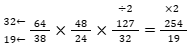
He circles his result.
| 14 | INT. EDONOMEE - MAIA'S BEDROOM - LATE AFTERNOON | 14 |
|---|
Again, Maia has moved with the light. He hunches over his work, carefully engraving the face of his device——an astronomical calculator——to match the book's illustration.
Offscreen, the STAIRS CREAK furiously.
Maia closes his eyes and breathes, slow and careful. Perhaps Setheris will storm right past his room.
No such luck. His door opens with a SLAM against the wall. Maia flinches.
SETHERIS
Get dressed! Get dressed!
Setheris storms into the room. His hair is coming out of its pins. Dramatic circles line his eyes.
Maia drops his engraving tool, scrambling to his feet. Setheris grabs him and lifts him by the collar before he is even off the floor.
SETHERIS
Thou lookst a foundling, boy. Hast never bathed? Never combed? Goddesses!
He releases Maia, who looks down at himself, at his trousers and shirtsleeves and suspenders. They are the same mourning clothes from his childhood, patched several times over. The mismatched lengths of each garment betrays his change in height, yet fit perfectly at the hips and waist.
Setheris tears a jacket from the broken wardrobe and throws it at Maia, hanger and all.
SETHERIS
Shoes! Where are thy shoes, boy?
He tramples Maia's papers as he crosses to the bed, which he searches under in a panic. Maia can only stammer.
SETHERIS
Quickly! There is an airship at the mooring mast!
MAIA
Airship? Why?
A heavy accent marks each syllable. Despite ten years in the north with an elven guardian, he speaks as one who has spent his whole life in Barizhan——but not the Barizhan of reality. It is the Barizhan of wonder-tales from whence he hails, and his voice reflects that in its breathy, halting quality.
??? what
Setheris pulls a pair of shoes out from under the bed. He throws them at Maia, who is still putting on his jacket.
SETHERIS
How should I know? Idiot.
He stands and dusts himself. His hands are shaking.
SETHERIS
The last time an airship graced Edonomee, it dropped thee at my doorstep. Perhaps thy father has another bastard to be rid of.
With a sharp turn, he faces Maia, who flinches once more. This is the only power Setheris Nelar still has in relegation, and he basks in it.
SETHERIS
Keep thy chin high, boy. Such diffidence hardly befits an Archduke.
The flank of a crooked finger under Maia's chin punctuates the order, forcing him to raise his head. Maia opens his mouth to reply, but cannot find the words in time.
SETHERIS
And for both of our sakes, hobgoblin, do not speak!
Defeated, Maia closes his mouth. He nods.
This satisfies Setheris. He pushes Maia out the door. Maia gives the room one last look; his papers have been stepped on and his device remains incomplete.
| 15 | INT. EDONOMEE - FOYER - LATE AFTERNOON | 15 |
|---|
An EDONOMEE SERVANT opens the door. Enter Imperial courier CSEVET AISAVA (twenty-five, charming in a homely sort of way) with a bow. Despite his somber expression, his face is a bright spot against the dark sky of Edonomee.
AISAVA
News from the Court.
The servant steps back to allow him in. Aisava's first steps into Edonomee are hesitant. He looks up the length of the walls, at the numerous animal heads that have been stuffed and mounted.
A Pelanraneise Cormorant stares back at him with wide, glassy eyes.
EDONOMEE SERVANT
This way, if you please.
The servant stands before the door to the center room, his face as haunted and severe as the decor.
Aisava offers him a nod. He follows.
| 16 | INT. EDONOMEE - CENTER ROOM - LATE AFTERNOON | 16 |
|---|
The door to the center room swings open. The servant enters, followed by Aisava.
Very little change has graced the room since Miche'maia's arrival. Perhaps there are a greater number of cobwebs.
Maia and Setheris are already here. Maia would be taller than his guardian, were he permitted to stand. Instead, he sits with his hands clasped in his lap. Setheris stands behind him, a hand placed decidedly on the chairback. They are framed by the great, antlered firescreen of Edonomee.
Aisaiva's eyes go wide. Setheris coughs.
SETHERIS
Well?
AISAVA
(to Maia)
Are you the Archduke Maia Drazhar, only child of Varenechibel the Fourth and Chenelo Drazharan?
Maia looks up at Setheris. He was told not to speak.
Suspicion prickles Setheris's otherwise practiced countenance. He gestures for Maia to answer.
MAIA
Yes?
To the separate horrors of both Maia and Setheris, Aisava falls to his knees. He is the first to prostrate himself before Maia Drazhar, but he will not be the last.
AISAVA
Your Imperial Serenity.
Revelation dawns on Setheris Nelar.
When Aisava does not stand, Maia looks to Setheris. Finding no reaction, he takes a gamble and kneels beside Aisava.
MAIA
You bring us letter, yes? Very kind. Please, we read together.
Aisava cannot bring himself to touch an emperor, even an unwitting one.
Maia, accustomed to certain treatment by the household at Edonomee, presumes another source for his reluctance. He shows Aisava his palms, then the backs of his hands.
MAIA
Clean, see?
SETHERIS
(to Aisava)
We'll have to get through this one way or another, won't we? Up on your feet, then, courier.
At last, Aisava accepts the proffered hand. The smile Maia gives him is weak, but genuine.
Once all are standing, Aisava takes the letter from his leather bag. He looks to Maia.
AISAVA
Would you like to——to...?
Maia looks to Setheris again. It has never been his place to read letters. His smile weakens further.
SETHERIS
Just read it.
AISAVA
Right.
(he clears his throat)
'To the Archduke Maia Drazhar, heir to the imperial throne of Ethuveraz, greetings in this hour of greatest grief. Our name is——'
Aisava's voice slowly shifts into that of another.
IDRA (V.O.)
——Idra Drazhar, and we are your nephew.
DISSOLVE TO:
| 17 | EXT. UNTHEILENEISE COURT - MOORING MAST - DAY | 17 |
|---|
IDRA DRAZHAR (fourteen, the very image of an imperial Prince) looks on as his grandfather, VARENECHIBEL IV, approaches the airship WISDOM OF CHOHARO, followed by his NOHECHAREI, Idra's father NEMOLIS, uncles NAZHIRA and CIRIS, and the remainder of their retinue.
Idra calls out to his departing relatives, waving his farewell. His father turns, smiles, and waves back.
IDRA (V.O.) (CONT'D)
Our grandfather His Serenity Varenechibel the Fourth, our father Prince Nemolis, and our uncles Archduke Nazhira and Archduke Ciris passed away earlier today when their airship crashed whilst returning from the wedding of Prince Orchenis of Thu-Athamar.
| 18 | INT. AMAL'THEILEIAN - AFTERNOON | 18 |
|---|
The royal wedding. Newlyweds PRINCE ORCHENIS and ULEVIÄN CLUNETHARAN (neé TETHIMIN) approach Varenechibel. Both are veiled in shimmering sharadansho, wrists and ears dripping princely cats-eye and polished elesth beads. They bow. With the nod of his head, the whole of Varenechibel's retinue bows back.
XX NOTE WE WILL OF COURSE FIND NO SYMPATHY FROM THE AMAL-ATHAMEISE PRODUCTION BOARD SHOULD WE REQUEST TO FILM IN THE AMAL'THEILEIAN. WORSE, WE MAY ENCOUNTER THE AUTOGLORIOUS DILETTANTES WHO CALL THEMSELVES KINEMEISEI, AND THEY ALWAYS HAVE ADVICE. AFTER A CONVERSATION WITH MER OLVARA'S SECRETARY, WE BELIEVE THAT THE SET OF THE ULIMEIRE——OR RATHER, THE SET OF THE ROOM THAT IS 'AS' AN ULIMEIRE——MAY BE FIT FOR REUSE. AIVO, WHAT THINKST TYOU? —CAMB XX
an thou findst it acceptable
we take no issue x
| 19 | EXT. CRASH SITE - MIDMORNING | 19 |
|---|
Archival footage from the aftermath of the HEART OF THE MERVANENS DISASTER: twisted metal, a field aflame.
IDRA (V.O.) (CONT'D)
The Lord Chancellor, Dach'osmer Uleris Chavar, gave his condolences to our person and then began immediately to speak of plans for our coronation as Varenechibel the Fifth.
| 20 | INT. PRINCE'S APARTMENTS - IDRA'S ROOM - LATE MORNING | 20 |
|---|
A finely dressed man who can only be ULERIS CHAVAR prostrates himself before Idra.
Idra clasps his hand to his mouth, collapsing to sit on the chaise behind him. He is a puppet with its strings cut, and indeed, a puppet is what Chavar desires him to be.
IDRA (V.O.) (CONT'D)
This greatly unsettles us. The Elflands are rightly yours, and, selfishly, we recognise that we are but fourteen years of age. We know well the fate of the past Michenzhasai.
A wider angle reveals the news of his father's death comes in the sitting area of Idra's bedroom. Though the hand at his mouth bears a platinum signet ring, it is still undoubtedly the bedroom of a child.
The desk is stacked high with textbooks, a history essay half written. The bookshelves hold brightly-bound adventure novels with alliterative names. There is a bokh set untouched on the table between two armchairs, whilst a board-game with dice and colorful game pieces sits unfinished on the floor, ringed by three pillows.
IDRA (V.O.) (CONT'D)
We fear at best Chavar is such a bigot he would see you stripped of your birthright, and at worst seeks to use this terrible tragedy to personal gain, placing himself as our regent before most likely disposing of you and I both.
Idra collects himself, blinking back tears. He squares his shoulders and speaks to Chavar.
We cannot hear the words, but their body language makes clear their conversation has quickly become an argument.
Chavar is domineering and condescending; Idra grows increasingly upset and frustrated, showing the raw emotion he is too well-bred to express in a letter.
IDRA
(inaudible)
Our father has just died, and you cannot spare us an hour to mourn him? The coronation can wait! The naming of a regent can wait! Now get out.
Chavar obeys.
IDRA (V.O.) (CONT'D)
We have requested Chavar keep secret the tragic loss to our nation for another day, nominally to give us time to grieve our father in private. We do not think he suspects our true intentions.
Finally alone, Idra is wracked with sobs, hiding his face in his hands.
His chest heaves. His hands shift: still covering his mouth and nose, but we may now see his eyes, screwed tightly shut.
Another shaky breath. His clasped hands fall to his lap, elbows braced on his knees.
He forces himself up, and takes a seat at his desk, pulling out a fresh sheet of paper. He flicks the switch on the gas-heated wax warmer, then begins to write.
IDRA (V.O.) (CONT'D)
We beg you come at once to the Untheileneise Court to claim your birthright, and, selfishly, to help us.
| 21 | INT. PRINCE'S APARTMENTS - IDRA'S ROOM - CONT'D | 21 |
|---|
The letter, now written, is folded carefully in thirds and placed in an envelope.
Idra pours a bit of the melted wax on the seam of the envelope, uncertain how much he needs for the seal. Slips the ring off his finger to press it into the hot wax.
His signet is a sleek cat depicted in profile, gracefully mid-stretch.
IDRA (V.O.) (CONT'D)
We have no one else in whom to put our trust.
| 22 | INT. PRINCE'S APARTMENTS - DRESSING ROOM - NOON | 22 |
|---|
Idra sits atop a velvet stool, swathed in mourning blacks. Hands come from offscreen to comb, twist, and pin his hair into place. His grey eyes stare off into the distance.
With the last amber-headed pins in his delicate white hair, the EDOCHARIS (elven, late teens) bows to Idra, seen behind him in the mirror.
Idra twists to face the edocharis, reaching for his arm. Desperation is writ plain on Idra's fine-boned face.
Their brief conversation we watch from Idra's back, symbolically emphasizing his youth. The sealed letter passes from Idra to the edocharis, who bows once more.
IDRA (V.O.) (CONT'D)
Our edocharis, Lanis, will await your airship's arrival, so we may meet at once and approach Dach'osmer Chavar as a united front.
| 23 | INT. PRINCE'S APARTMENTS - DINING ROOM - NOON | 23 |
|---|
The same shot at Idra's back, now alone at his luncheon. He picks at his food. Rack focus to a massive portrait of Varenechibel IV surrounded by his three elven sons in the background. A guard in Drazhadeise livery stands before it, watching the young prince like a hawk.
IDRA (V.O.) (CONT'D)
Yours humbly and faithfully——
| 24 | INT. EDONOMEE - CENTER ROOM - CONT'D | 24 |
|---|
AISAVA
'——Prince Idra Drazhar.'
XX NOTE AIVO YOU GENIUS. YOU WILL HAVE OUR JOB FROM US SHORTLY WE FEAR. MANY THANKS FOR RESCUING THE MONTAGE FROM A RATHER SORRY STATE —CAMB XX
thankee x
Silence consumes Edonomee.
Setheris stands with his knuckles pressed to his mouth. Aisava can do little more than hold the letter.
Maia glances between the two of them. His face is a portrait of fear, of uncertainty. At last, he speaks:
MAIA
We are——we are sorry, we...
Aisava nods, spurring him to continue——and earning a groan from Setheris.
SETHERIS
We fear His Serenity has not understood a word. Isn't that right, boy?
Maia ducks his head, effectively silenced.
SETHERIS
He came into our custody without a word of his father's tongue——nor the wits to string two thoughts together. Shameful.
AISAVA
That——that rather beggars belief...
SETHERIS
Does it? Watch.
(with his voice raised)
Your father! Is dead!
Maia's whole body is strung as tightly as by a violineisa. His instinct to flee clashes against the presence of a guest.
SETHERIS (CONT'D)
Your brothers! Are dead! You know who that leaves, boy? Tell me!
No response, not even a flinch. It's like shouting at a statue. Maia's eyes are fixed to the floor, eerie silver unblinking.
Aisava winces.
SETHERIS (CONT'D)
You! It leaves you! Ethuverazhid Zhas in all his glory!
He descends into a FIT OF LAUGHTER. It doubles him over, forces his long-jailed body to shake.
XX NOTE THE FOLLOWING DIALOGUE WAS ORIGINALLY WRITTEN IN BARIZHIN RATHER THAN MERELY NOTED AS SUCH. OUR THANKS TO OUR MOST VENERABLE PRODUCER OSMER KHENAR FOR REMINDING US THAT THERE ARE THOSE WHO STILL VALUE THEIR ELVEN HERITAGE ABOVE MUTUAL CLARITY —CAMB XX
MAIA
(quietly, in Barizhin)
It is the same word. 'Dead'.
If Setheris hears this, he is too overcome with his ill-placed mirth to react.
Aisava, meanwhile, recovers from his own increasing horror long enough to return the earlier gamble with his own:
AISAVA
(in Barizhin)
Airship. Of— er... from sky. Fell.
Though his command of the language is far from expert, it is enough. Maia's eyes widen. He makes a warding gesture.
MAIA
(in Barizhin)
It crashed? Truthfully? They're all dead?
Aisava nods.
AISAVA
(in Barizhin)
Yes, yes, most truth. Father, brother——you know. Er. Son to brother says... home. Please.
By this time, Setheris has regained himself enough to shake his head. Whatever composure he had before, it is gone from him; that is to say, he is drunk. He has been drunk.
SETHERIS
Commendable try, Mer Courier, but it will do you no good. That Sevresechedeise blood breeds true: He is a cretin in any language.
A grimace from Aisava.
SETHERIS
You seem a sharp one. We would not see your wits wasted on he who has none.
He puts a hand to Aisava's back.
SETHERIS (CONT'D)
Come. Strategy will be our only weapon in this battle. We would like to know more of what has developed during our absence from Court. Won't you join us?
It is not a question. He pushes Aisava towards the stairs.
MAIA
No.
Setheris stops cold. He turns. Slowly.
SETHERIS
No?
He stalks forward. Nose to nose, still Maia holds his ground. This only further enrages Setheris. He now stands directly between Maia and Aisava.
SETHERIS
And who art thou to tell me no, boy?
For all that he shakes, Maia Drazhar does not budge.
MAIA
Zhas.
Setheris stares. His eyes threaten to bulge forth from his skull. On instinct, he raises a hand——
Maia's eyes shut tight.
But Setheris does not strike. He cannot, not yet. Instead, he flicks his wrist in a flourish that resembles, but is not, a bow.
SETHERIS
Serenity.
With that, he straightens himself, and marches from the room. He very nearly pushes Aisava over on his way up. The stairs CREAK with each step.
Once Setheris is gone, Maia exhales. He appears on the verge of collapse. Still, he manages to put on a polite, if awkward, smile.
MAIA
We are... sorry. For yelling.
AISAVA
No, it's quite——
MAIA
(in Barizhin)
His wife writes to him. When letters come...
(in Ethuverazhin)
...the couriers, he...
He knows the words——they are simply too cruel to say aloud.
AISAVA
He hurts them?
Carefully, Maia nods.
AISAVA
In that case, you have our thanks, Serenity.
The bow he performs here is genuine. Partway through, he looks up at Maia and offers him a smile.
| 25 | OMITTED | 25 |
|---|
| 26 | OMITTED | 26 |
|---|
| 27 | INT. UNTHEILENEISE COURT - RECEIVING ROOM | 27 |
|---|
The Emperor's receiving room is smaller, warmer than the rest of the court——but no less stately.
Idra, attended by a GUARDSMAN, has perched himself at the secretary's desk. His posture is impeccable. He keeps his hands firmly in his lap, the closest he is permitted to fidgeting.
Sound of the door to the receiving room as it OPENS. Idra's gaze flies to up to see:
The edocharis leads Maia, wide-eyed and painfully thin, into the room. Csevet follows close behind, then Setheris.
IDRA
Uncle!
Idra leaps forward. Gone is the prince of mere moments ago; now he is but a grieving boy who has just laid eyes on one of the few family members still alive.
His arms wrap around Maia's slight frame. Maia, who has faced naught but the lash since the death of his mother, stands stiff. He pats Idra's shoulder.
Setheris grimaces.
IDRA
Uncle Maia, it heartens us to see you safe! We waited and waited for your airship to come, we could not bear the thought of another crash, we couldn't——
He stops short, tears visibly forming at the edges of his eyes. He stares up at Maia, at that same apologetic smile shown to Aisava earlier.
IDRA
Uncle? Is... is aught amiss?
It is Aisava, thankfully, who steps forward.
AISAVA
Prince Idra. Regrettably, His Serenity was never taught Ethuverazhin.
SETHERIS (defensively) He cannot be taught. |
MAIA We understand little bit. |
Maia falls silent, and Aisava clenches his jaw. Cold, quiet fury builds behind the mask of his professionalism.
SETHERIS (CONT'D)
For ten years, we have laboured beneath the yoke of this impossible task——
The prince returns. He has pinned Setheris beneath the authority of his gaze and taken his measure thoroughly.
IDRA
We think it best you leave us, Osmer Nelar. Perhaps you should see to your household, now that you have returned from relegation.
For ten years, Setheris has held absolute power at Edonomee. Whatever he once knew of elegant compliance was lost long ago. He recognises this and, in an act of self-preservation, bows his head.
SETHERIS
Yes, Prince Idra. We thank you, Prince Idra.
IDRA
Good.
(to Aisava)
We would have our uncle understand us, and to feel understood in turn. Know you of any who might serve as our interpreter?
Setheris stalks off towards the entryway of the receiving room. He is hunched over, his ears lower than he perhaps realises. A thought strikes him.
AISAVA (O.S.)
It will be done, Prince Idra.
Setheris turns.
SETHERIS
(dryly)
Not so fast, Mer Courier. This is the Ethuverazhid Zhas, remember. You will need a Witness vel ama to speak on his behalf in any matters of state. Know you any goblin prelates?
Neither Idra nor Aisava possess a timely response.
SETHERIS
We will be with our wife.
He leaves.
SETHERIS (O.S.)
Ah, Chavar. Wonderful. Now the hobgoblin can be your problem.
Like chastised schoolboys, Idra and Maia share an anxious look and straighten. They are out of time.
The door OPENS.
IDRA
Lord Chancellor.
CHAVAR
Serenity... Prince Idra. We beg your pardons for the confusion earlier today. We were... misinformed as to the matter of succession in the case of the emperor and crown prince passing away simultaneously.
Chavar is a consummate politician, smooth as an eel. If he holds any concern of whether the excuse he’s about to deliver is plausible enough to stand between him and the sunblade, nothing in his face betrays it.
CHAVAR (CONT'D)
Had Prince Nemolis survived His Serenity even briefly, it would have been you, Prince Idra, who inherited the throne. And this morning it was still unclear if in fact he had. No slight was intended, of course.
IDRA
Of course.
(to Maia)
He says 'it was a mistake, sorry'.
Maia acknowledges this with a raise of his brows, but keeps his mouth closed and countenance neutral.
Chavar looks between Idra and Maia, taking their measure. He turns to Maia and finally bends a knee.
CHAVAR
We offer our sincerest apologies for the numerous indignities Your Serenity has already been made to suffer so early in your reign.
He knows what he is doing; there is no question of it.
CHAVAR (CONT'D)
Including the indignity of travelling to court by airship. Had we the chance to arrange things, we would have secured Your Serenity a much safer mode of transportation. A proper imperial caravan would have——
MAIA
Safer? Airship very safe. Or... we understand wrong? You say many word.
Chavar does not have a response to this.
MAIA (CONT'D)
Horses? Very beautiful——but careful! Horse is scared, horse runs. Easy injury. Horse kicks? Easy injury. And many horse all at once? Terrible. Many horse, many danger.
He speaks increasingly quickly, anxiously. He expects to be cut off, and is thrown by the fact he hasn't been already.
MAIA (CONT'D)
But airship? Oh, yes. One engine fails, is possible. But engines are many. Hole in material is possible, and traveller is scared. But most time, falling is slow! And michenballons make slower. Yes, airship very safe!
CHAVAR
...Perhaps ordinarily that is true. But surely, given the circumstances, Your Serenity would have preferred not to take such a risk?
IDRA
'Given the circumstances'? Forgive our asking so bluntly, Lord Chancellor, but do you mean to suggest the crash was the work of an assassin?
CHAVAR
Surely not!
Chavar, so cool and unbothered mere minutes ago as he excused an act of what seemed to be willful treason, splutters. A guilty man's defensiveness, or a loyal servant of the Elflands's horror at an unthinkable proposition?
CHAVAR (CONT'D)
The tragedy of the situation cannot be understated, but it is just that: a tragedy. Whilst His Serenity's apparent interest in our transportion infrastructure is admirable, we find it wise to recall that airships do, on occasion, catch fire.
MAIA
Fire? Wisdom of Choharo is catch fire?
CHAVAR
(dryly)
It did not simply drop out of the sky, Serenity.
IDRA
It exploded.
MAIA
Exploded! No one say!
(to Aisava)
Why you not say?
IDRA
(in earnest confusion)
Does it matter?
MAIA
Matters very! Is wrong. Is needs...
(he struggles for the word)
Adbosekh. Looking...?
AISAVA
An investigation.
MAIA
Thank you. Needs aninvestigezhin. Wisdom of Choharo is heliösar airship. You see?
IDRA
Heliösar. The air part?
Being understood, even just this once, animates Maia.
MAIA
Yes! Is inert——means, 'not catch fire'. Is more safe, but more cost, is why many airship using eisonsar. An Wisdom of Choharo catch'd fire...
IDRA
...someone caused it to do so.
Maia nods. He looks to Aisava.
MAIA
Aninvestigezheisei, we see them when?
CHAVAR
Serenity! With all due respect! The task of appointing judicial witnesses is far below the seat of Ethuverazhid Zhas. We will see it done.
Maia and Idra trade uneasy glances. But if Chavar had any part in the killing of one emperor, a secret, unscheduled audience is not the place for the uncrowned successor and boy-prince to accuse him.
Maia inhales. Taking his cue from the imperial mien Idra shrugged on so easily with Setheris:
MAIA
Good.
IDRA
We sorely need a cup of tea. Where is the bell in here?
The question is largely rhetorical. He looks under the fine elesth table for a hidden switch——a stark reminder that Idra, though he may have been raised at court, is still out of his element, and still very young.
AISAVA
We will see to it, Prince Idra.
Idra nods assent.
Chavar is speaking again, but his WORDS BLEND TOGETHER. Our focus moves with Aisava as he exits the room. He closes the door behind him.
Steady view on the closed door; when it opens again, a SERVANT GIRL (thirteen, cropped hair) enters carrying an intricately cloisonné enameled teapot on a silver tray. Maia, Idra, Chavar, and Aisava now all sit around the table with assorted papers and empty teacups and plates at their settings.
Silently, the servant girl refills teacups and gathers finished plates.
MAIA
(mouths)
Thank you.
CHAVAR (O.S.)
...leaves the matter of the funeral. It would be wise to hold it as soon as possible after the coronation, lest Your Serenity be seen to dishonour the memory of your father and brothers.
On the sidelines, Idra holds his cup of tea in both hands. His father died this morning.
MAIA
Our father's memory. We... we wish honour, yes.
A KNOCK at the door. A DRAZHADEISE SERVANT opens it just widely enough to peek inside.
DRAZHADEISE SERVANT
Serenity. The Adremaza and the Captain of the Untheileneise Guard await without.
| 28 | INT. CEREDADA APARTMENTS - DINING ROOM - EVENING | 28 |
|---|
XX NOTE MANY THANKS TO MER OLVARA, WHO HAS ONCE AGAIN OUTDONE HIMSELF W THE NOTE 'THE ROOM MUST READ AS CSETHIRO ZHASAN, BUT NOT AS ZHASAN, AND ONLY SOMEWHAT AS CSETHIRO.' WE HAVE CHANGED THE BELOW TEXT TO THE BEST OF OUR ABILITY (AND PATIENCE)—CAMB XX
The world within the damask-papered walls of the apartments is lively at dinner-time. Though not lacking in elegance, the dining room possesses a good, clean warmth that we have yet to see on our screen. The table is bountiful with bread, cheese, and oil, and the family is full of bright, cheerful faces.
At the head of the table sits CEREDEL (late fifties, trembles when excited), who puffs with pride as he looks upon his five daughters. To his immediate left is CEREDARAN (thirty, visibly pregnant). She lays back in her chair, a cold, wet cloth pressed to her temples.
Moving clockwise, we see the YOUNGEST SISTER steal a crusty piece of bread from the plate of her sister, the ROSIEST SISTER, earning her a smack on the wrist.
Next is the ELDEST SISTER (nearly thirty, also visibly pregnant), who chastises the Rosiest. Her own husband, the BROTHER-IN-LAW sits across from her, bland and stiff. Then there is the second-born LOUDEST SISTER, who elbows her Brother-in-law to no reaction.
Finally, to her father's left is CSETHIRO ONE-DAY-ZHASAN (twenties, severe). Amidst the din, she sits with a copy of RIPOSTE: PHILOLOGICAL IMPLICATIONS OF THE PARRY IN EDREVENIVAR'S COURT in one hand and a fork in the other.
ROSIEST SISTER
It was mine first! She's the one who stole from me!
YOUNGEST SISTER
I would not need to steal if thou wouldst not hoard all the very best of the spread at the start.
ROSIEST SISTER
See? She admits it!
ELDEST SISTER
Please, let us be civil. We will have plenty to eat at the reception.
The Loudest Sister swirls her orchor around in its cup.
LOUDEST SISTER
An we are fortunate enough to still be awake by then.
BROTHER-IN-LAW
...Isn't that your second cup?
LOUDEST SISTER
Third.
YOUNGEST SISTER
I am soon to grow taller, Sister, I can feel it! Wouldst deny me a bit of bread?
ROSIEST SISTER
A bit of my bread!
ELDEST SISTER
Squabbling does not become thee, Dach'osmin.
YOUNGEST SISTER
Especially not on coronation day!
ELDEST SISTER
Nor does it do thee any favours, Michen. Now keep thy hands to thyself, or wilt attend the Untheileian with thy arms tied to thy sides.
CEREDARAN
Girls, please.
LOUDEST SISTER
(into her teacup)
'Girls'?
The Eldest Sister shoots the Loudest a warning glance. She's right, but perhaps it should not be remarked upon.
CEREDEL
Oh, a lovely day. An auspicious day, indeed. My wife at my side; my daughters all around me. Has any man been quite so fortunate as myself?
LOUDEST SISTER
Well, there is a certain Archduke about to receive a promotion...
ROSIEST SISTER
Canst not say such a thing!
(she whispers)
A man has died!
LOUDEST SISTER
(dryly)
Several, as I understand it.
CEREDARAN
Girls! Please!
CEREDEL
Must listen to your stepmother, girls. Death is a tragedy; I would not claim otherwise. But such talk is the talk of funerals! Today, we must speak of life!
He SLAMS his fist on the table for emphasis. The plates CLATTER. His wife winces at the sound.
LOUDEST SISTER
(to Csethiro)
Thinkst this table can handle any more 'life', Sister?
CSETHIRO
We are reading our book.
LOUDEST SISTER
Such coldness! And from my own kin. What fear'st thou?
CSETHIRO
Don't.
LOUDEST SISTER
Don't what? Dear, dear Csethiro! Do I sense that there is aught thou wish'st not to be uttered? A specific word, perhaps?
BROTHER-IN-LAW
(to Eldest Sister)
What, exactly, are we speaking of?
ELDEST SISTER
It is nothing, my darling. Eat thy croquettes and cream.
ROSIEST SISTER
Nothing? Oh, Csethiro! But hast the opportunity! It is not fair!
CEREDARAN
Might we please all quiet down? There is a long night ahead of us, and there will be plenty of time in the coming weeks to discuss the matter of Csethiro's eligibility—
CEREDEL
Ah, yes! Eligibility!
Csethiro's book SMACKS shut. She casts a glare towards Ceredaran, who in turn glares at Ceredel.
CEREDEL
Right. I see. Fear not, michen. The topic shall be cast far from my mind.
Slowly, the table falls into a stilted sort of silence. The Rosiest and the Youngest stare down into their plates, as if they themselves have been chastised. The brother-in-law opens his mouth——and thinks better of it as soon as he sees his wife. At last, Csethiro reopens her book.
CEREDEL
...Though it does seem a stroke of good fortune for thee to remain unspoken for.
ELDEST SISTER
Father!
LOUDEST SISTER
Surely we are all aware that Csethiro shan't be spoken for until she finds someone who can actually speak over her.
YOUNGEST SISTER
Then she really must marry the Emperor! Who else could manage such a task?
ROSIEST SISTER
Well I heard he doesn't speak.
YOUNGEST SISTER
What, not at all? Is he simple, like Archduchess Ino?
ELDEST SISTER
Michen!
YOUNGEST SISTER
I'm just asking!
ROSIEST SISTER
I don't know! Linaro's father works for Lord Chavar, and she said that he said that Edrehasivar didn't speak, and that they must learn to refer to Csoru Zhasan as Csoru Zhas.
CSETHIRO
Zhasanai.
She continues to make a great show of reading her book. Audible rustle of paper when she TURNS THE PAGE.
BROTHER-IN-LAW
Sorry——the emperor doesn't speak?
ELDEST SISTER
Darling. Croquettes.
CEREDEL
Wait! Don't tell me thou art on outs with Csoru again, michen!
CSETHIRO
An thou insist it.
ELDEST SISTER
Really Father, canst not truly believe she was ever 'in' with the Zhasan to begin with.
CSETHIRO
Zhasanai.
LOUDEST SISTER
I remember it like 'twere yesterday: Csoru on the floor, her tooth knocked clean from her face. Our sweet sister, rolling up her sleeve for another go. Sweet childhood...
CEREDEL
Didst what? When was this?!
CSETHIRO
'Twas only a milk tooth.
LOUDEST SISTER
Hm. Shame.
CEREDEL
And——and didst not think to include it in thy list of apologies? Csethiro, she is Zhasanai!
ROSIEST SISTER
Perhaps even Zhas...
CEREDEL
This could jeopardise thy eligibility! For all we know, Csoru Drazharan is telling His Serenity all about the villainous Dach'osmin Ceredin!
CSETHIRO
Father, I must beg thy sense of reason to prevail! The moment Csoru Drazharan realises that she has found someone yet unfamiliar with her tactics, she will lock herself in her apartments and refuse to say a word until he delivers the Dachen Mura to her doorstep.
CUT TO:
| 29 | INT. UNTHEILEIAN - NIGHT | 29 |
|---|
CSORU (twenty, dollish and doe-eyed) stands before Maia, her hands placed in his. She is in deepest mourning, like all the rest of the courtiers. Maia, draped head to toe in imperial white, is the only spot of brightness in the room.
CSORU
And though we shall carry this grief of ours to the end of our days; though we know that our life, our heart, our very soul is no longer ours to give——
A single, delicate tear rolls down her cheek. Still, her hands remain in place.
CSORU (CONT'D)
——we pledge all that is ours to you, Serenity. Long may the crown sit upon your brow!
The Ceredada watch the coronation from below. For a moment, all of Csethiro's sisters look to her. Her ears flick once in annoyance.
Back on Maia. A diaphanous white veil, pinned in place with tashin sticks, partially obscures his face—indeed, an elf would completely disappear in the sea of white—but his near black skin allows us a glimpse of a toothy smile and the crinkling of his eyes.
MAIA
(amused)
We think there is formula for oath, Zhasan.
XX NOTE WE RECOGNISE OSMER KHENAR'S CONCERNS REGARDING THE DIGNITY OF THE IMPERIAL PERSON, BUT FOR WHAT IT IS WORTH THE ARCHDUCHESS CHENO WAS KIND ENOUGH TO LOOK OVER THE SCRIPT AT A DINNER PARTY RECENTLY AND FOUND THE DASH OF DRY HUMOUR, INJECTED——WE REMIND——AT THE INSPIRATION OF HIS SERENITY'S OWN CORRESPONDENCE WITH CSETHIRO ZHASAN, HEARTENINGLY FAMILIAR —CAMB XX
CSORU
A formulaic oath cannot speak true to our heart, Serenity——but an you insist...
Again, to the Ceredada:
ROSIEST SISTER
What are they saying?
YOUNGEST SISTER
I think he fancies her. Must write that apology after all, Csethiro.
LOUDEST SISTER
Isn't that a Barizheise thing? I never finish those novels.
ROSIEST SISTER
Well Linaro reads them plenty and according to her the avarsin are always marrying their brother's widows and such. Imagine! One's sons would be cousins!
YOUNGEST SISTER
Bizarre. Think'st their baby will know to come out wrong?
ELDEST SISTER
Hush.
Close on Csethiro as she snorts.
She watches Csoru step down from the dais, oath given. The Archduchess NEMRIAN (nearly forty, delicate) approaches next. Her own oath is inaudible.
Close on Maia now. If he is nervous, his face does not show it——his face shows nothing at all.
Beneath the innumerable kerosene lamps strung across the high, trellised ceiling of the Untheileian, Maia's face is painted in soft, scattered light. It clarifies the gentleness of his features; casts exquisite shadows upon his skin.
LOUDEST SISTER
At least he is not bad to look at.
Csethiro startles. Her sister grins.
CSETHIRO
And how much did Father bribe thee to say so?
LOUDEST SISTER
Art stubbornness incarnate. I have eyes, Sister, that is all.
Up on the dais, Idra presents his sisters INO and MIREӒN (six and eight years of age respectively) to Maia to give their own oaths, their small figures silhouetted and draped in full black veils.
Maia's expression softens. He leans down just enough to let Mireän put her hands in his.
The Loudest Sister smirks.
LOUDEST SISTER
By the look of thee, hast eyes as well.
Chavar approaches his emperor and kneels before him, disdain undisguised. He lifts his hands to put them in Maia's, as he must.
CHAVAR
Your Serenity...
We see Maia's face, unreadable.
Then Idra's, mouth twisting in discomfort.
Then Csethiro, watching the dais with a rapt expression.
Then Csoru, whispering to the KINSMAN beside her.
When we return to Maia, disembodied hands are lowering the Ethuverazhid Mura onto his head. The bells of the Untheilemeire strike midnight.
A great CRY erupts from the crowd.
ANNOUNCER (O.S.)
Edrehasivar Zhas, seventh of that name.
Maia takes his seat on the throne of Ethuveraz. The crowd falls upon the floor in unison.
| 30 | INT. UNTHEILEIAN - LATER | 30 |
|---|
Music, now: a CHAMBER ENSEMBLE playing an energetic WALTZ. Their emperor crowned, the ceremony has become a party.
Dancing, CONVERSATIONAL BUZZ. Servants in Untheileneise livery proffer finger foods to celebrating courtiers.
As Idra ushers his young sisters away from their uncle, Csoru approaches the throne with a plate in each hand, one with an assortment of appetizers, the other stacked high with tiny, saffron-garnished rasgulla and nothing else.
The assortment, she offers to Maia.
CSORU
Here. You must be starving.
MAIA
Thank you, Zhasanai.
He holds the plate a bit awkwardly, and does not eat.
MAIA (CONT'D)
You make introduction?
Csoru's kinsman, seen briefly at the ceremony, remains at her side. THARA CELEHAR (thirty, as delicate and doll-like as his cousin) wears his hair in a prelate's single, sober braid. The devices of Ulis run along the neck and shoulders of his black frock coat in sharp, simple embroidery.
He prostrates himself.
THARA
Your Serenity. We are Thara Celehar.
CSORU
Our cousin is a Witness vel ama, Serenity.
(she smiles broadly)
And as it happens, he is fluent in Barizhin.
THARA
(in Barizhin)
We were raised in southern Thu-Tetar, near the Barizheise border, so we had the opportunity to learn——although 'fluent' is not the word we would use, and we know our accent is atrocious. Pray forgive us any mistakes, Serenity.
Maia nearly drops his plate. A nohecharis takes it from him, allowing him to lean forward.
MAIA
(in Barizhin)
The bells! Those that chimed at the moment of our coronation. They are part of a clock, yes?
Thara recovers easily from any confusion.
THARA
(in Barizhin)
Yes, Serenity. The clock, one could say.
MAIA
(in Barizhin)
Does it have a name? The great clock? Oh! But forgive our imprudence——'tis only we asked Idra earlier but could not make ourself understood. You are a blessing on our house. For all that it is ours, anyhow.
THARA
(in Barizhin)
Your kindness is a blessing on me. The bell, we know, is called Michen Raimeän, for the goddess of storms, but if the clock has a particular name, Serenity, we fear we do not know it. Would you like us to find out?
MAIA
(in Barizhin)
No, no, we suppose we ought not waste whatever time we have with you. It is limited, we assume.
THARA
(in Barizhin)
The Court does not look fondly upon men such as ourself, no.
MAIA
(in Barizhin)
Then that makes two of us.
Open alarm on Thara's face and ears. Maia raises a conciliatory hand.
MAIA
(in Barizhin)
Peace. We should not have spoken so freely. Bitterness becomes an emperor not. You speak of the impact of our late father's disregard for religion, yes?
THARA
(in Barizhin, nodding)
We do.
Csoru looks awkwardly between the emperor and her kinsman, unable to follow most of the conversation but mollified, at least, by the fact Thara's hackles have smoothed back down.
THARA (CONT'D)
(in Barizhin)
Ah, but the Zhasanai will want an answer to the question she is not permitted to ask. We have never witnessed for the living before, but as Witness for the Dead we took the same oaths as a Witness for the Emperor. We are bound to the truth, and to revethvoran should we forsake it.
MAIA
(in Barizhin)
It would please us greatly to call upon your service as an interpreter, Othala Celehar. And your accent is lovely, by the way. You must not apologise for it.
At the word 'Othala', Csoru must conceal her snicker in a bite of rasgulla. She recovers herself with grace.
THARA
(in Barizhin)
It would please us greatly to serve, Serenity.
He bows.
CSORU
We are delighted to see that you find our cousin's Barizhin comprehensible, Serenity.
MAIA
Is very good, very good. He teach you Barizhin, teach us Ethuverazhin, we be able to speak more in tomorrows. Yes?
Csethiro watches the conversation from a ways away. The sight of Csoru exhausts her enough on its own, let alone when she has so blatantly shifted her charisma into top gear.
Ceredel, on the other hand, notices Csoru at the Emperor's side and brightens. He passes his little plate off to the Eldest and hurries over to Csethiro.
CEREDEL
Come, michen. No better opportunity will arise!
He pulls Csethiro forward——she plants her feet.
CSETHIRO
Father, please! The man hasn't eaten for a day and a half. Look at him! He could faint at a moment's notice!
Ceredel leans in close and says, low and quiet:
CEREDEL
And if he were to swoon at the mere sight of my Csethiro, it would echo my own meeting with thy mother, may she rest easy.
He has called upon his strongest soldier. Both are well aware he intends to clobber her into agreement, but Csethiro cannot bring herself to deny him outright.
CEREDEL
Csoru knows thee. 'Tis as much a cause for introduction as any. If not for my sake, nor even for thy own, wilt not do it for thy mother? For a chance her daughter might bring a man to his very knees, just as she once did?
With pursed lips, Csethiro allows herself to be pulled.
Back with Maia and the Zhasanai, Thara points out the rough locations of where the great clock's inner workings stretch out across the entire room. An engrossed Maia watches on.
THARA
(in Barizhin)
...And there, Serenity, is the maintenance point for that particular cluster.
MAIA
(in Barizhin)
Magnificent! So well hidden!
Ceredel approaches from off screen, with Csethiro several steps behind. He clears his throat. All eyes turn to him. Once certain that he has the group's attention, he prostrates himself.
CEREDEL
Serenity. May we approach?
Thara clears his throat.
THARA
(in Barizhin, hushed)
Serenity. May we approach?
XX NOTE FROM THIS POINT THARA SHALL ECHO EACH SPEAKER IN BARIZHIN, EXCEPT WHERE SPECIFIC DIALOGUE IS GIVEN —CAMB XX
Maia looks to Thara and Csoru. Has this man not already approached? Nonetheless, he nods.
Ceredel returns to his feet.
CEREDEL
We wish to offer you our heartfelt congratulations. The coronation is no easy task. Rather, we do not imagine it as such.
Maia stares down at the Marquess. He has recovered the stony impassivity of an emperor.
This shift between demeanors does little for Ceredel's nerves. He flounders.
CEREDEL
Obviously we have not experienced it for ourself. Nor will we ever! It is an experience reserved for a very select few. Of which you are one, Serenity. Which is to say...
CSETHIRO
He wishes to present his daughter to you, Serenity.
Csethiro approaches, stiff and regal as any general. Her arrival elicits an elegantly arched brow from Csoru, but no remarks are made.
CSETHIRO
We are Csethiro Ceredin, third daughter to the Marquess Ceredel.
She, too, prostrates herself.
Maia betrays himself with a flick of the eyes. For the duration of a breath, his gaze searches for any place to land but upon her.
Csoru's features scrunch into something that could be construed as sympathy. It could be pity just as easily. Noblewoman that she is, Csethiro keeps her face towards the floor until Maia signals for her to stand. She does so with as much dignity as she can manage.
CSETHIRO
Thank you, Serenity. Now, if you will permit us our leave, we believe we have taken enough of your time already.
CEREDEL
Zhasanai! Zhasanai. You are the daughter of our dearest friend, yes? Brothers of the heart, we call one another.
CSORU
That is how you refer to one another, yes.
CEREDEL
And surely you recall that, er, that we sought to raise the two of you as...
CSORU
As sisters? We do not suppose we could forget it.
Ceredel's hands shake. He forces himself to smile.
CEREDEL
(to Maia)
We were taken in by Csoru Zhasanai's grandfather, you see, and her father considers himself to be our brother. We swear to you, Serenity, we did not approach you on mere acquaintanceship!
CSORU
Ah, the humility of the Ceredada. The Marquess understates the situation as always.
CSETHIRO
You would know a great deal of humility, Zhasanai.
THARA
(in Barizhin, hushed)
...our cousin says——ah, oh dear. 'The Ceredadeise humility'...
CSETHIRO
(tightly)
Actually, might we borrow our dearest heart-sister a moment?
She does not wait for permission before grabbing Csoru's upper arm and tugging her aside, though not so far away their hushed conversation cannot be partially overheard and vice versa.
This leaves Maia and Thara to converse with Ceredel. We overhear:
CEREDEL (O.S.) ...daughter seems to have forgotten herself. MAIA (O.S.) Apology is not needing. |
CSETHIRO We admit we are impressed, Csoru. We always thought thou hadst a remarkable acuity for tripping and falling upwards, but this is actually quite clever. |
CSETHIRO (CONT'D)
Thy cousin an interpreter so thou canst whisper whatever thou wishest into His Serenity's ear? We know thou didst ever want to be a cat...
Csethiro's gaze dips to Csoru's signet ring.
CSETHIRO (CONT'D)
...but what a showing! Not three days and already thy claws are sunk deep the gossipmongers are proclaiming your imminent engagement. What a pity the honour shall come at the cost of the very last shred of thine.
CSORU
Our claws? Makest quite a statement, given the sharpness of thy tongue. But we suppose thou fanciest thyself in competition with us, given...
In unison, they glance at Ceredel.
CEREDEL
Indeed, Serenity. She is our late father's sister.
Csoru scoffs. She pops a rasgulla into her mouth and covers it with the back of her hand.
CSORU
(garbled)
Have him an thou likest.
She swallows.
CSORU (CONT'D)
We have no designs upon him. And Thara is far too much of a wet blanket to be of any use if we did. Ulis 'talks' to him in his dreams, he takes it all very seriously.
CSETHIRO
Playing the innocent suits thee ill.
CSORU
Is it so difficult for thee to believe we simply want to help him?
CSETHIRO
Yes!
A brief return to the gentlemen. Ceredel in the middle of a RAMBLE about riding, or opera, or some other diversion Maia——raised in destitute relegation——can only nod at in polite confusion.
Ceredel keeps glancing anxiously Csethiro's way.
MAIA
(in Barizhin, hushed)
Is something wrong?
He inclines his head towards the ladies.
Thara shakes his head.
THARA
(in Barizhin, hushed)
Later.
CSORU
...invited us along to the funeral for the crew of the airship. He's so earnest it hurts. He'll be dead in a month without us. And thou knowest we've always had a fondness for pathetic little creatures. Dost remember that poor bird thy dog savaged when we were girls?
CSETHIRO
The one thou took'st to the Csaiveiso? His Serenity is not a pigeon, Csoru.
CSORU
Of course not. He's a clever little cuckoo. Hast not noticed how he holds himself upon the dais?
Maia has yet to falter an inch. Ceredel, a lifelong courtier, fumbles all the more brilliantly in comparison.
CSORU
The very image of a father he met but once. The flock may not accept him, but surely dost recognise how they tuck the nest in around him.
As she says this, we look more closely upon the nohecharei, upon Thara and Aisava. The ring they form around him may be small, but already it is tightly wound.
CSETHIRO
Knowest as well as I that the Court is more cage than nest, Zhasanai.
CSORU
Ever the optimist, o 'heart-sister' of mine. Art a tragedy, I swear't.
CSETHIRO
This from a woman whose husband is not yet interred.
CSETHIRO
Mhm! I would know, wouldn't I? But come, we must rescue our Emperor from thy father. Unless——wishest to criticise me further?
Csethiro gladly would, under better circumstances. With a reluctant grimace, she follows Csoru back towards more pressing matters.
Back on the dais, Maia eats a raw quail's egg out of the half-shell as Ceredel carries on his one-sided conversation. He has barely touched the finger foods on his plate.
He nods and hums at appropriate moments, but absentmindedly. His eyes keep returning to Csethiro.
THARA
(in Barizhin, hushed)
...but doing so would decrease the profit margins of paper products and——Serenity, no one would pass judgment upon the decision to dismiss the Marquess, were you to make it. Least of all the Marquess himself, perhaps.
MAIA
(in Barizhin, hushed)
No, no. The man is nervous. We cannot possibly establish a precedent for casting a courtier aside for poor nerves alone, it would——Ah! Zhasanai!
Csoru glitters her way back onscreen and sinks into an elaborate bow. Csethiro, on the other hand, returns to her father stiff and scowling.
|
CSORU Our apologies, Serenity. We regret to admit that we have not had time to meet with Dach'osmin Ceredin since... oh, it must have been just after our wedding day.
|
CEREDEL (hushed) Where hast thou been? CSETHIRO (hushed) Worry not. I've returned. |
CEREDEL
Serenity, we offer apologies on our daughter's behalf. The excitement of the day has affected us all, hasn't it?
With that, he bows. He looks to Csethiro, making the expectation for her to do the same as clear as he can.
Csethiro's posture remains rod-straight. She stares her father down, but he can only stand there, folded over, face blank. She returns her attention to Maia.
CSETHIRO
We thank you for your attention, Serenity. If there is nothing more you wish to say, we would gladly take our leave.
Maia searches his attendants for an answer. He finds just as much as Csethiro. He clears his throat.
MAIA
Yes. We... we allow.
Csethiro turns. There is a march in her step as she departs.
Her father bows one last time before running after her.
CSORU
Well! At least this was an accurate introduction to your courtiers.
THARA
Csoru. Unnecessary.
CSORU
We beg your most honourable pardon, 'Othala'. But are we incorrect?
Maia watches Csethiro and Ceredel reunite with their family. The Marquess's face has turned a rather impressive shade of scarlet. He practically falls into his wife's arms.
THARA
His Serenity has perhaps exceeded the number of ordeals that a person can undergo in a row. You could have intervened.
The Eldest Sister takes it upon herself to scold Csethiro. Ceredaran, despite being occupied with her husband, attempts to do the same.
CSORU
Intervene? With Csethiro? Quite a plan, Cousin.
Maia regards the Ceredada in unreadable silence.
The other Ceredinnoi now surround Csethiro, full of questions and exclamations and, most of all, opinions. Despite it all, Csethiro maintains her exceptional composure.
Csethiro catches Maia staring. They both turn away, quick as a child who has touched a hot stove.
| 31 | INT. ALCETHMERET STAIRWELL - PAST MIDNIGHT | 31 |
|---|
Maia and his train ascend the great spiral stairs in clockwise fashion. Though he keeps his chin high and shoulders level, he makes for a demure bride on this first night in what is now truly Edrehasivar's bed.
XX WE ARE AFRAID WE DO NOT CARE WHETHER THE ALCETHMERET STAIRWELL TURNS CLOCKWISE OR COUNTER-CLOCKWISE. WE DO NOT IMAGINE WE WILL BE PERMITTED TO FILM WITHIN THE ACTUAL STAIRWELL, AND EVEN IF THE COMPANY WERE GRANTED SUCH A MIRACLE, WE HAVE DECIDED THAT THE EMPEROR GOES CLOCKWARDS ALWAYS. UPWARDS, DOWNWARDS, SIDEWAYS——MAKE IT WORK —CAMB XX
| 32 | INT. EMPEROR'S CHAMBERS - PAST MIDNIGHT | 32 |
|---|
From a slight advantage, some ten or fifteen degrees above:
The three EDOCHAREI surround Maia. First they remove the jewels from his neck, his ears, his fingers. They then set to work on his braids, carefully removing all the little ornaments as they work.
Slow push in on Maia. He struggles to stay upright, let alone awake. His lids grow heavy. His eyes focus on something out in the distance, something beyond the audience's view.
Reverse. The great canopied bed——the site of his conception, of his father's conception, of his father's father's conception——looms before him. The nearby oil lamps cannot light it in full.
Once more, Maia is rendered a vague silhouette. With his hair half-braided and his face unknowable, it could just as easily be Miche'maia we sit with.
Shadows pool across Maia’s back. A hand creeps into view. Rack focus to Maia as his Edocharis undoes the topmost fastenings at the back of his neck.
KAMERA FLASH.
INSERT - Edonomee exterior.
SHUTTER.
Present Maia's face overlays the inserted image. His eyes widen.
KAMERA FLASH.
Extreme close on Maia's eyes. The silver of his irises drown out the image below.
INSERT - A figure sits beneath the hood of a late Varedeise wet-plate studio kamera. The figure's arm lifts the flash as a great victorious torch. Silver bleeds in from the edges in root-like formations that stretch hungrily towards Maia's irises until——
EDOCHARIS
Serenity?
KAMERA FLASH.
Maia INHALES. He chokes on air alone.
EDOCHARIS
Serenity? Are you well?
The fit forces Maia to double over. Slow zoom out as both edocharei and nohecharei flock to him.